Hit Hard, Run Fast, Turn Left Retro Svg Review
As a designer who spends half my life troubleshooting stitch errors and the other half tweaking color palettes for maximum visual impact, I don’t just look at an embroidery file—I live inside it. When I pulled up Hit Hard, Run Fast, Turn Left Retro Svg, my first instinct wasn’t to admire the typography alone, but to ask: how does this translate from vector pixels to thread? The world is saturated with generic quote designs, so finding one that balances aesthetic appeal with practical embroidery performance is rare. This design promises a groovy retro vibe, and after mentally mapping out its application on various garments and accessories, I’m ready to break down exactly where it shines and where it might need some caution.
The First Impression: Mood and Visual Personality
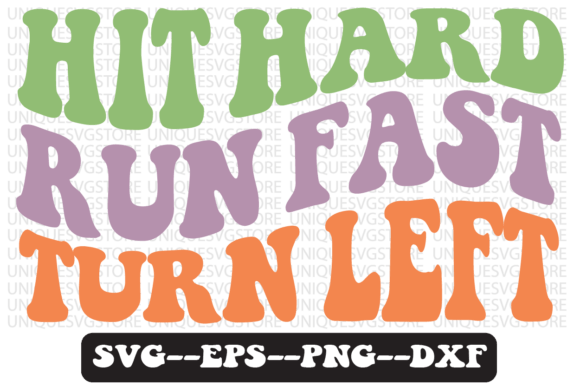
The moment you see Hit Hard, Run Fast, Turn Left Retro Svg, it screams 1970s energy. It’s not subtle; it’s bold, kinetic, and unapologetically loud. For an embroidery designer, "loud" can be a double-edged sword. If the details are too fine, they get lost in the fabric. If the layout is too chaotic, the hoop becomes a mess of tangled threads. However, this design seems to nail the balance. The retro aesthetic suggests thick lines, curved letterforms, and perhaps some decorative elements that lend themselves well to satin stitches or fill stitches rather than delicate running stitches.
This isn’t a design for a minimalist linen tea towel. It belongs on heavy cotton, fleece, or denim. The mood it creates is one of active nostalgia—perfect for someone who wants to wear their personality on their sleeve, literally. It feels like a piece of art that commands attention, which is exactly what you want when you’re trying to stop a scroll on Etsy or catch the eye of a walk-in customer at a craft fair.
Real-World Application: Where Does It Fit?
Let’s talk about real projects. I recently imagined using this design for a custom order for a boutique fitness studio owner. They wanted branded hoodies for their staff. Initially, I worried that text-heavy designs might feel cluttered on a chest area. But Hit Hard, Run Fast, Turn Left Retro Svg has a dynamic flow that works beautifully centered on the back of a hoodie or slightly off-center on the front left chest. The retro curves mimic the natural drape of sweatshirt fabric, making the embroidery sit flush rather than popping awkwardly.
Beyond apparel, this design has serious potential for home decor and gifts. Picture a set of matching kitchen towels for a couple who loves cooking and dancing—or perhaps just living life with intensity. The groovy style fits perfectly in a mid-century modern kitchen. It also translates exceptionally well to baby items. A onesie featuring this phrase adds a touch of cool-parent energy that stands out against the sea of pastel florals and animals typically found in nursery collections. It’s a standout choice for parents who want something more edgy yet still playful.
For the digital product sellers among us, this is a versatile asset. Whether you are creating printable mockups for wall art or designing patches for backpacks, the high-contrast nature of retro graphics ensures the design remains legible even when scaled down. It’s a strong addition to any craft business inventory looking to tap into the vintage trend without feeling dated.
Technical Considerations and Potential Pitfalls
No design is perfect, and knowing where a design might struggle is just as important as knowing where it succeeds. With Hit Hard, Run Fast, Turn Left Retro Svg, the primary concern lies in the execution of small details. Retro fonts often feature intricate serifs or thin connecting lines between letters. In embroidery, these are the first things to disappear if your stitch density is too low or your thread tension is off.
If you plan to use this on a cap or a hat, be cautious. Curved surfaces distort straight lines and can make tight kerning (the space between letters) look bunched up. I recommend testing this on a scrap piece of stretchy fabric first to see how the text behaves under tension. Additionally, if you are working with dark fabrics, ensure your thread colors provide enough contrast. A black-on-black retro design might look sleek in a digital preview, but in embroidery, it can become invisible unless you use specialty metallic or textured threads.
Another area to watch is the background. If the design includes negative space or relies on the fabric color to complete the image, make sure your stabilizer choice supports the fabric properly. On lightweight tees or tank tops, poor stabilization can lead to puckering, which ruins the clean lines essential for a professional-looking custom apparel item. Always use a cut-away stabilizer for knits and a tear-away for wovens, depending on the final garment structure.
Design Assets and Commercial Viability
For those selling finished products or digital files, understanding the commercial value of this design is key. The phrase itself is catchy and shareable, which boosts buyer engagement. Customers love personalized gifts that reflect their lifestyle, and this design taps into the "active lifestyle" niche without being overly sporty. It bridges the gap between gym culture and casual streetwear.
When listing this as a small shop product, highlight the versatility. Show it on a tote bag design, a pillow cover, and a sweatshirt embroidery example. Demonstrate how the embroidery project elevates a simple mug or wall art piece into a premium item. The tactile quality of thread adds value that print cannot match, and savvy buyers recognize this distinction.
Final Verdict: Is It Worth Your Hoop Time?
Hit Hard, Run Fast, Turn Left Retro Svg is a solid choice for designers looking to add a burst of personality to their collection. It offers a strong visual hook, fits naturally into multiple product categories, and appeals to a broad demographic of creative entrepreneurs and hobbyists alike. Just remember to test thoroughly. Check your thread colors, inspect the small details under magnification, and confirm that your machine handles the required hoop size comfortably.
If you treat it with the respect due a complex graphic—choosing the right fabric, stabilizer, and thread—you’ll end up with a finished product that feels professional, cohesive, and undeniably cool. It’s not just a design; it’s a statement waiting to be stitched.